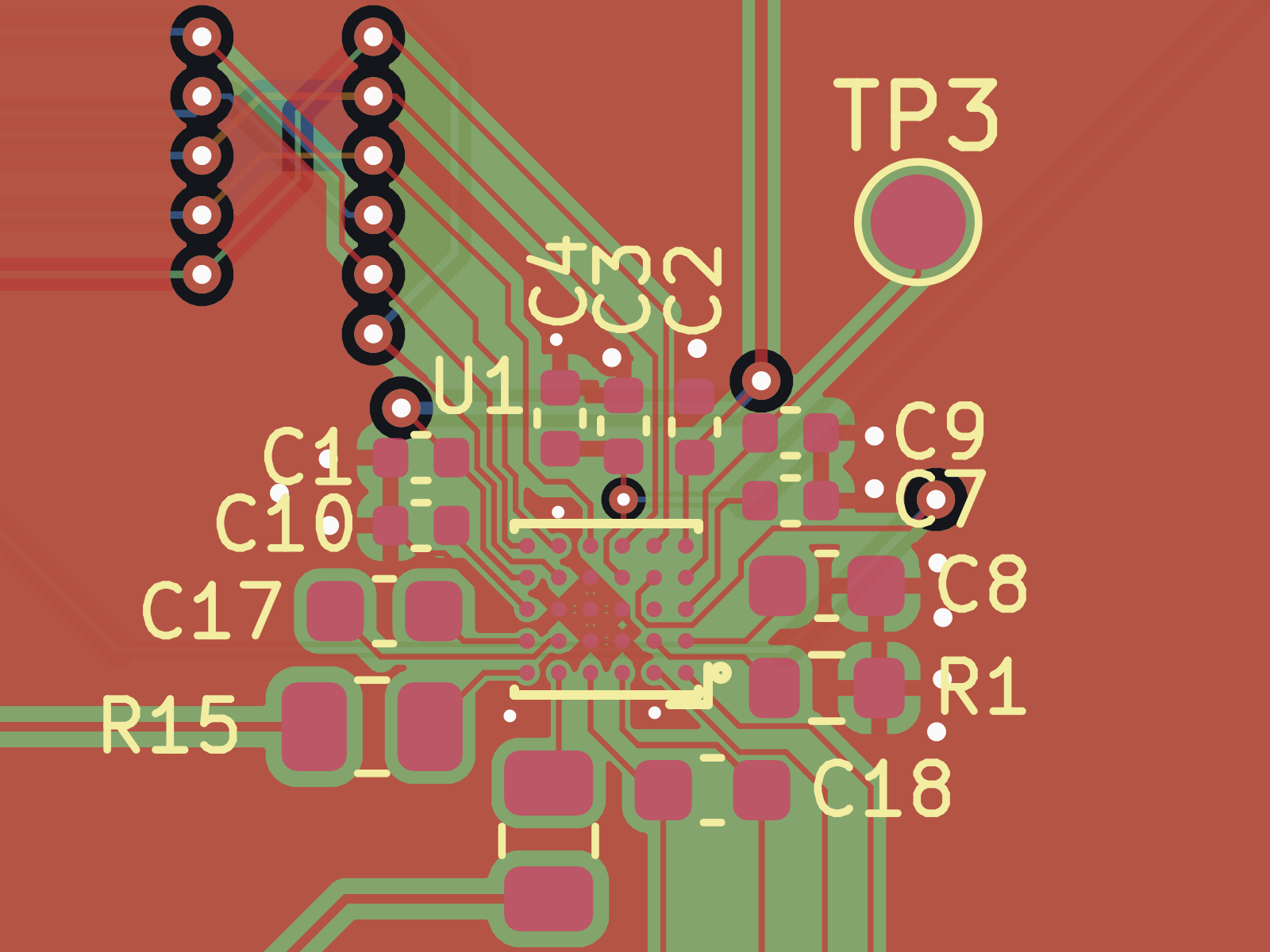
The first prototype is a 100 × 100 mm board. It is larger than the wearable we want to build because we needed room for connectors, test points and probes. That made the first measurements much easier.
We started with simple electrical checks. The MAX30001 responded over SPI, its clock locked, and its settings could be written and read back. We connected known resistors in place of an arm and checked that the readings rose in a straight line as the resistance increased.
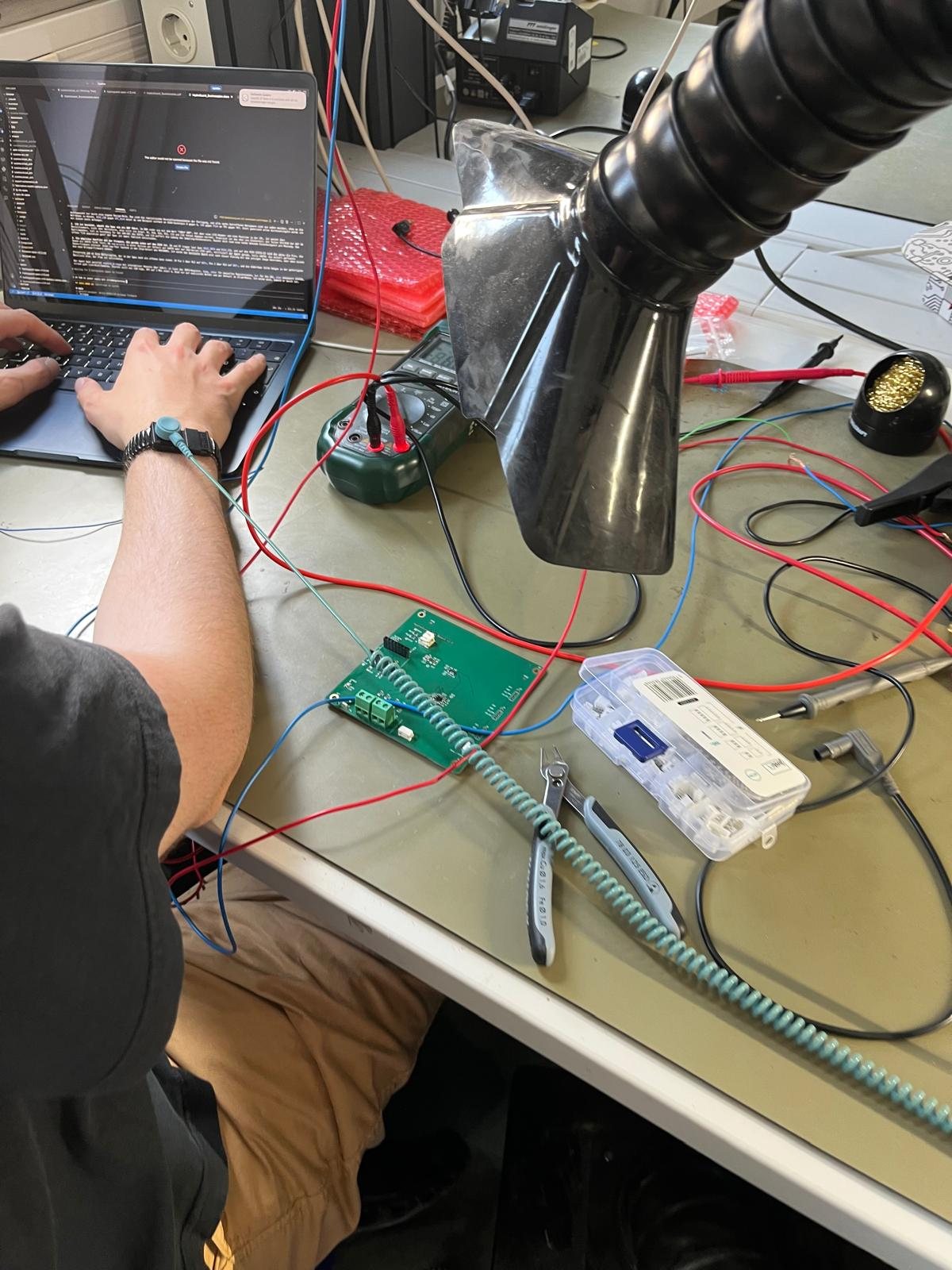
Trying it on an arm
Once the bench checks passed, we attached the four electrodes to a person’s upper arm and recorded the impedance before and after drinking water. The measured impedance dropped as hydration increased. That is the direction we expected.
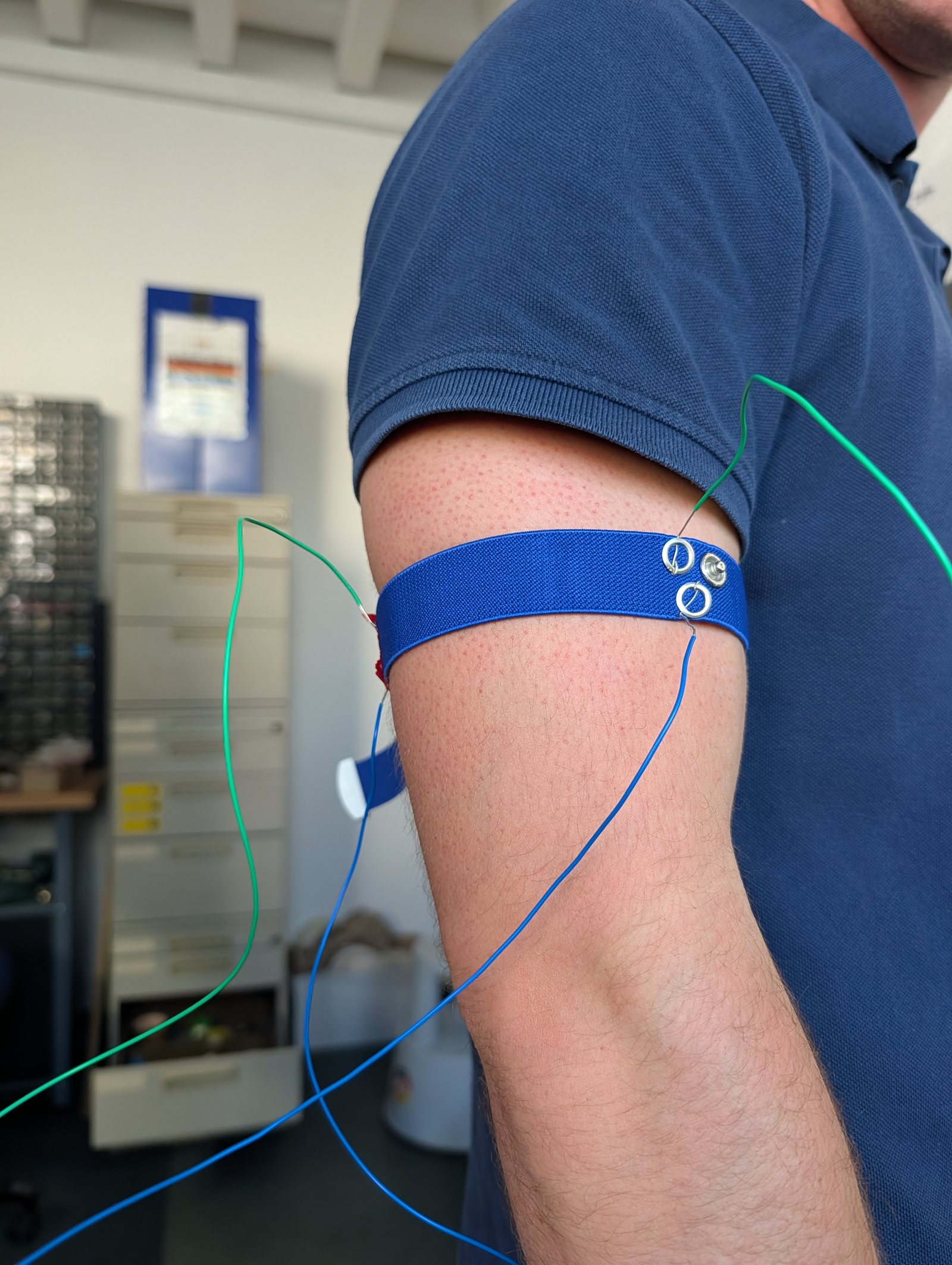
That answered the question we built the first prototype for: the complete measurement chain works, and it picks up a hydration-related change on a real arm.
Problems we fixed on the way
The first firmware used a high-pass filter that slowly removed the steady part of the signal. That setting was wrong for this measurement and is now disabled. We also fixed a watchdog reset, battery readings that were not being averaged correctly, and a pin conflict between the serial console and the MAX30001 interrupt.
We also learned not to rely on a single status bit for a disconnected electrode. The software now checks the measured value itself and rejects readings that sit at the limit.
What comes next
The second prototype keeps the same measurement principle but puts it on a smaller, lower-power board. It also adds motion and humidity sensing so we can better understand what happened when a reading changes.