COSIMA 2026 · TUM Munich

Hydration changes before thirst begins.

HydroGuard measures hydration directly at the upper arm, the same bioimpedance principle clinics use. We are putting it on an armband that a care home or a building site can actually afford.

Research prototype. Not a medical device.

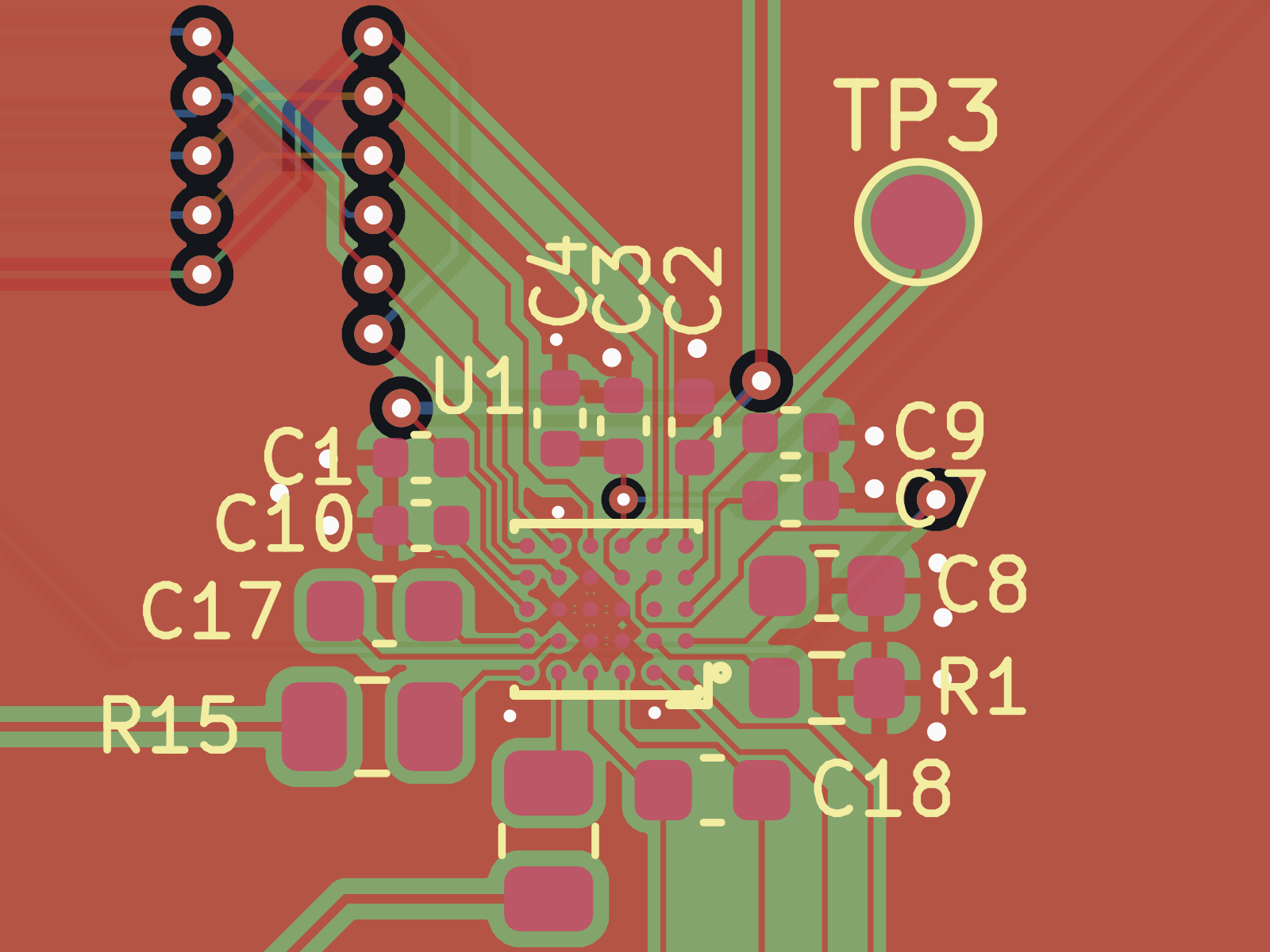
MAX30001 routing on the first HydroGuard prototype

Measure hydration at the upper arm.

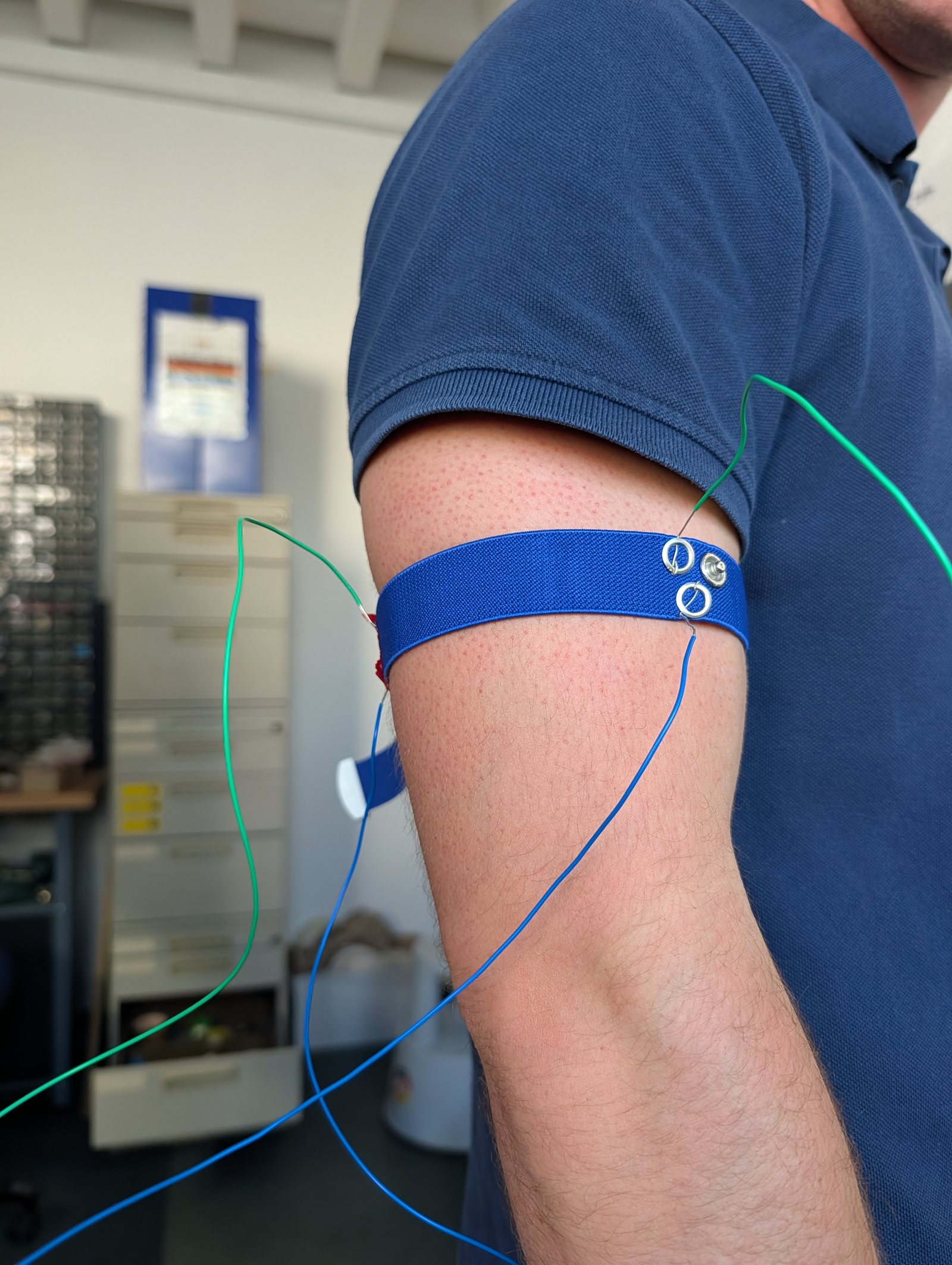
Four electrodes sit against the skin. One pair sends a very small alternating current through the arm and the other pair measures the voltage. From that, HydroGuard calculates impedance. The first prototype showed that the measurement changes in the expected direction after drinking.

We measure on the upper arm rather than the wrist. There is more tissue to read through, the band moves around less, and people are already used to wearing a sensor there.

People whose thirst no longer warns them in time.

Care homes

The sense of thirst fades with age. Care staff track how much a whole ward has had to drink by hand, on paper, and only see a problem once someone is already unwell. A band that watches the measurement itself can point at the person who needs attention today.

Working in heat

A shift on a building site can cost more fluid than anyone notices while they are working. The rules for hot weather have tightened in recent years, but there is still no simple way to see who is actually running dry.

The people around them

Whoever wears the band is often not the person who needs to act on it. HydroGuard can send a reading to a carer over Bluetooth instead of only buzzing on the arm.

The readings are worked out on the band itself. Nothing is streamed to a cloud service.

Tested 05 Aug 2026

First result

The idea worked.

We checked the electronics with known resistors, then tried the prototype on a person. After the person drank water, the measured impedance at the arm dropped. That was the result we needed before building the smaller second prototype.

Read how we tested it
Four electrodes on an elastic band around an upper arm

First test Four electrodes on an elastic band, worn on the upper arm.

From the first prototype to the second.

  1. 01

    Start with a board that is easy to test

    The first prototype is 100 × 100 mm. Its connectors and test points are easy to reach while we check the measurement circuit.

    Done
  2. 02

    Reduce size and power use

    The second prototype uses an nRF52840 module and can switch off the measurement circuit and sensors between readings.

    In progress
  3. 03

    Add motion and humidity

    An IMU and a humidity sensor help us tell hydration changes apart from movement, sweat and a shifted strap.

    Next
  4. 04

    Build the final enclosure

    The case has to hold the board and the battery against the arm, keep the electrodes flat on the skin and leave the humidity sensor an opening toward the arm.

    Planned

A smaller board that can sleep.

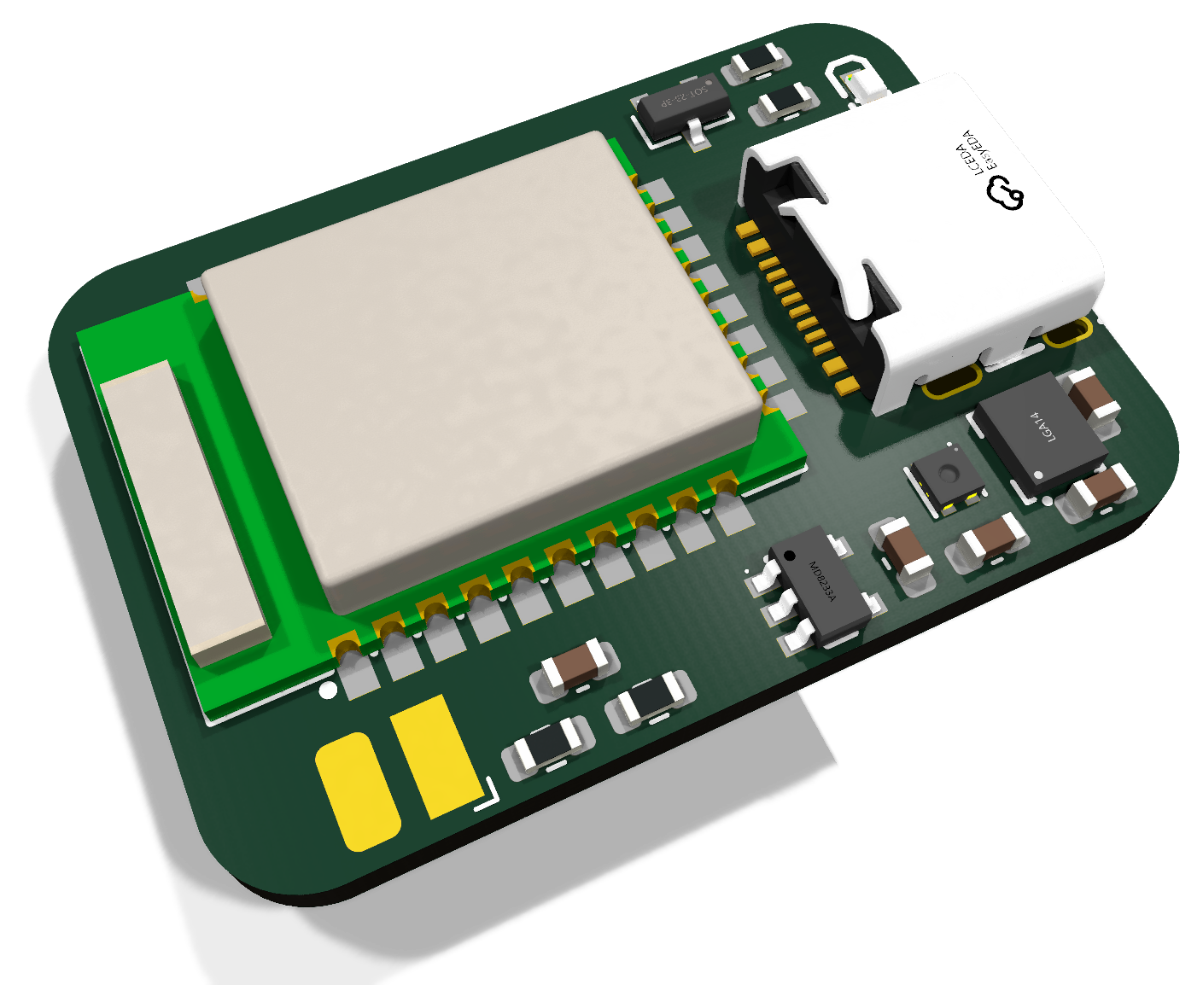
The second prototype uses an E73 nRF52840 module and two separate 1.8 V supplies. The MAX30001 and the sensors can be turned off independently between measurements. We will measure the real battery life once the board is assembled.

The second HydroGuard prototype board, roughly 30 by 21 mm
Roughly 30 × 21 mm.
Read about the second prototype
LiPo 200 mAh
E73 / nRF52840 Bluetooth + control
AFE_1V8 MAX30001 + clock
SENS_1V8 Motion + humidity
The two peripheral supplies can be switched separately.
All notes

Built at TUM for COSIMA 2026.

Lukas Müller-Tolk
EE @ TUM

Ayoub Lefi
EE @ TUM

Johannes v. Grundherr
EE @ TUM

Dr. Yushen Zhang
Supervisor

HydroGuard will be presented at the COSIMA student competition at electronica in Munich, 12 to 13 November 2026.